Seawater: It’s abundant, messy, contains salts, microorganisms, biomass, organic and inorganic pollutants (and microplastics) and might just be a great solvent for generating hydrogen peroxide with visible light photocatalysis
How should we compare commercial photoreactors? Or better yet, how do we discuss the important details of a photochemical reaction?
The Lucent360’s flexible design gives you the best options to learn everything you need to know to take your photochemical reactions from screen to scale.
A recurring theme in our recent articles: there isn’t enough iridium or ruthenium in the earth’s crust to do all the photochemistry we’d like to do at scale.
Our review of a recent Wickens paper describing the formation of powerful new photooxidants through a mechanism of multiphoton excitation.
This patented technology is game-changing for our field of focus and its efficiencies and precision will streamline research and the development of novel therapies.
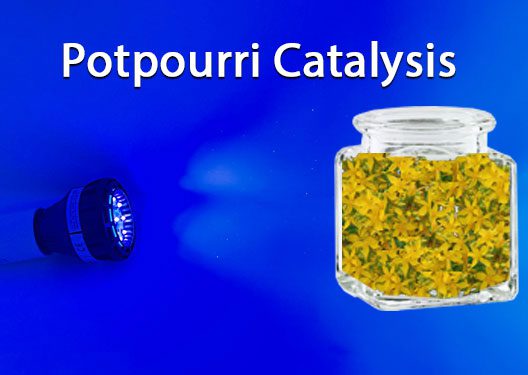
Add dried flower petals to your photochemistry reaction? This group did. Their paper on photoredox chemistry with organic dyes is brilliant.
How They Make That Color For Your LED Everyone reading this probably knows what metals, ligands and other reagents are in the reaction that is currently stirring under their hood. And as chemists, we can often be annoyingly particular about...
Many of these papers move the field farther into unimaginable areas, while others find photochemical replacements for traditional reactions solving an unmet need.
A quick guide to get you started with initial photochemistry reactions.
Second in our three-part series on Photochemistry 101. Get started by learning how to evaluate light, standardizing conditions and calculating photon flux.