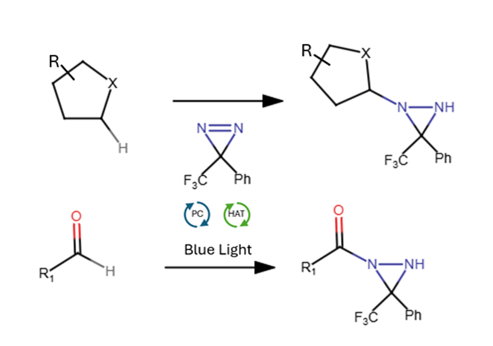
Researchers at the Moffitt Cancer Center and the University of South Florida report a metal-free photoredox strategy for C–H amination of unactivated substrates using diazirines as the nitrogen source – including the first synthesis of...
A new paper from the Taylor group at the University of Arizona introduces a metal-free, visible-light photosensitization strategy that labels Tryptophan residues with high selectivity in proteins, antibodies, and live cells – all run in the...
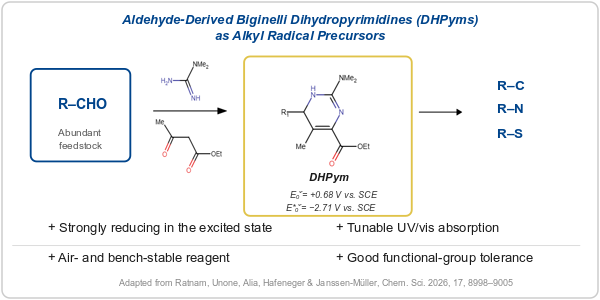
A new class of radical precursors from the Janssen-Müller group at Göttingen combines the synthetic accessibility of the century-old Biginelli reaction with redox properties that outperform the standard Hantzsch ester, allowing reactions that...
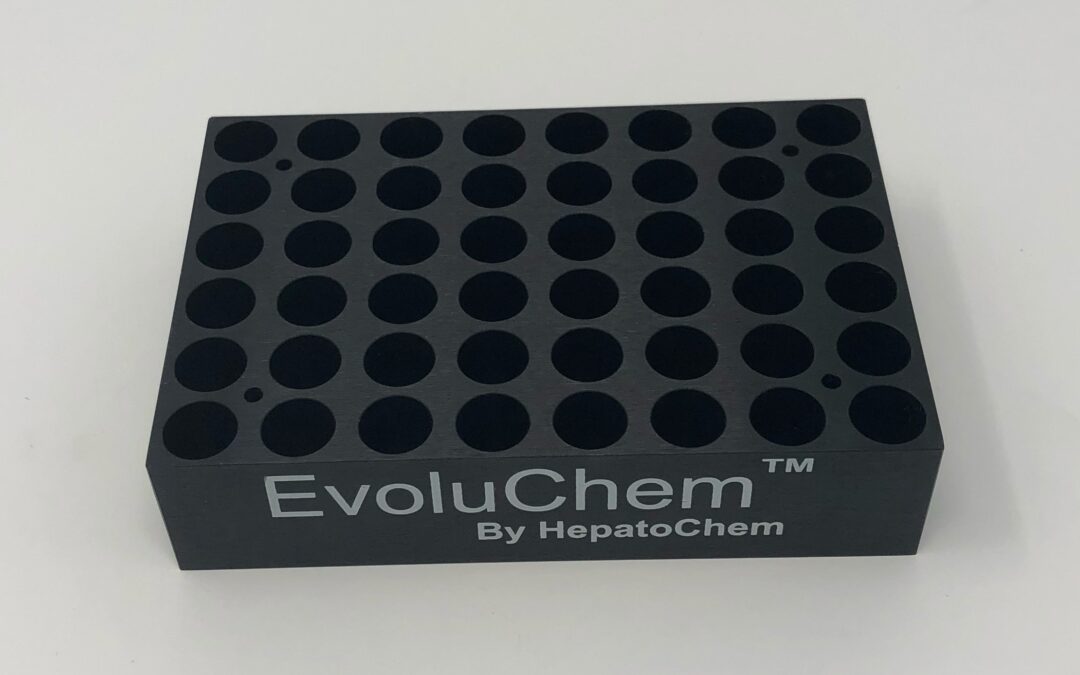
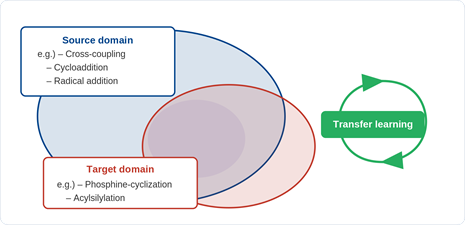
A new ML framework from Nagoya University uses transfer learning to guide organic photosensitizer screening, cutting the number of experiments needed from 25 down to 4, across a broad range of photoreactions run in the EvoluChem PhotoRedOx Box....
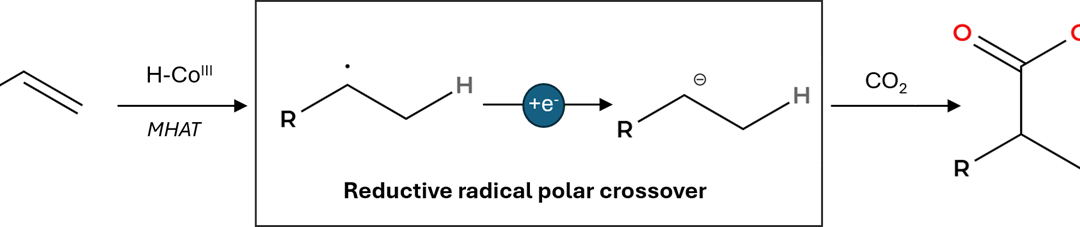
A new cobalt-photoredox method from the Teskey group turns the internal carbon of an olefin into a nucleophile, delivering 2-arylpropanoic acids in one step from styrenes and atmospheric CO2. Metal hydride hydrogen-atom-transfer (MHAT) catalysis is...
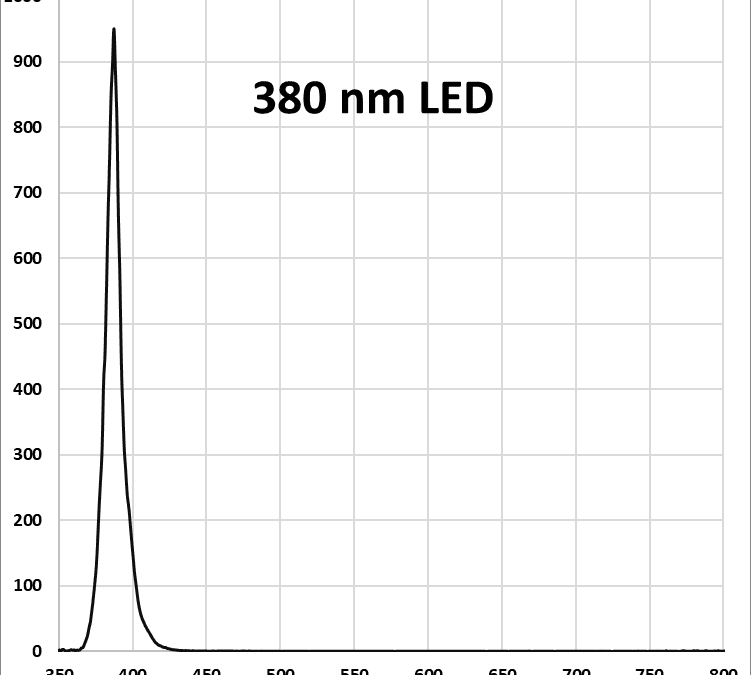
A Photochemical Route to Non-Hallucinogenic 5-HT2A Ligands A collaboration between the Mascal Lab at UC Davis, the McCorvy Lab at the Medical College of Wisconsin, and HepatoChem demonstrates how UV LEDs in the Lucent360™ transform a...
The Lucent360™ is the most complete photochemical reactor available for controlling and screening reaction parameters; wavelength, light intensity, reaction time, and temperature at both small and large scale. But specs only matter when you...
Our 25 favorite photochemistry papers from 2025 Happy New Year from all of us at HepatoChem. Before we move forward into another great year, let’s take a look back at the past year in photochemistry. 2025 gave us a ton of interesting...
Discover the power of red light in photochemistry! Explore recent advances in red LED-driven synthesis, from C-N coupling – protein labeling.
Looking back on the past year in photochemistry, we want to recognize 24 of our favorite papers from 2024 that tickled our brains.
Pulsing light in a photocatalysis reaction is like flipping on the strobe lights at a party—but can it shift the vibe enough to change outcomes? Inspired by a recent study, this month we take you for a spin on this experimental dance floor.